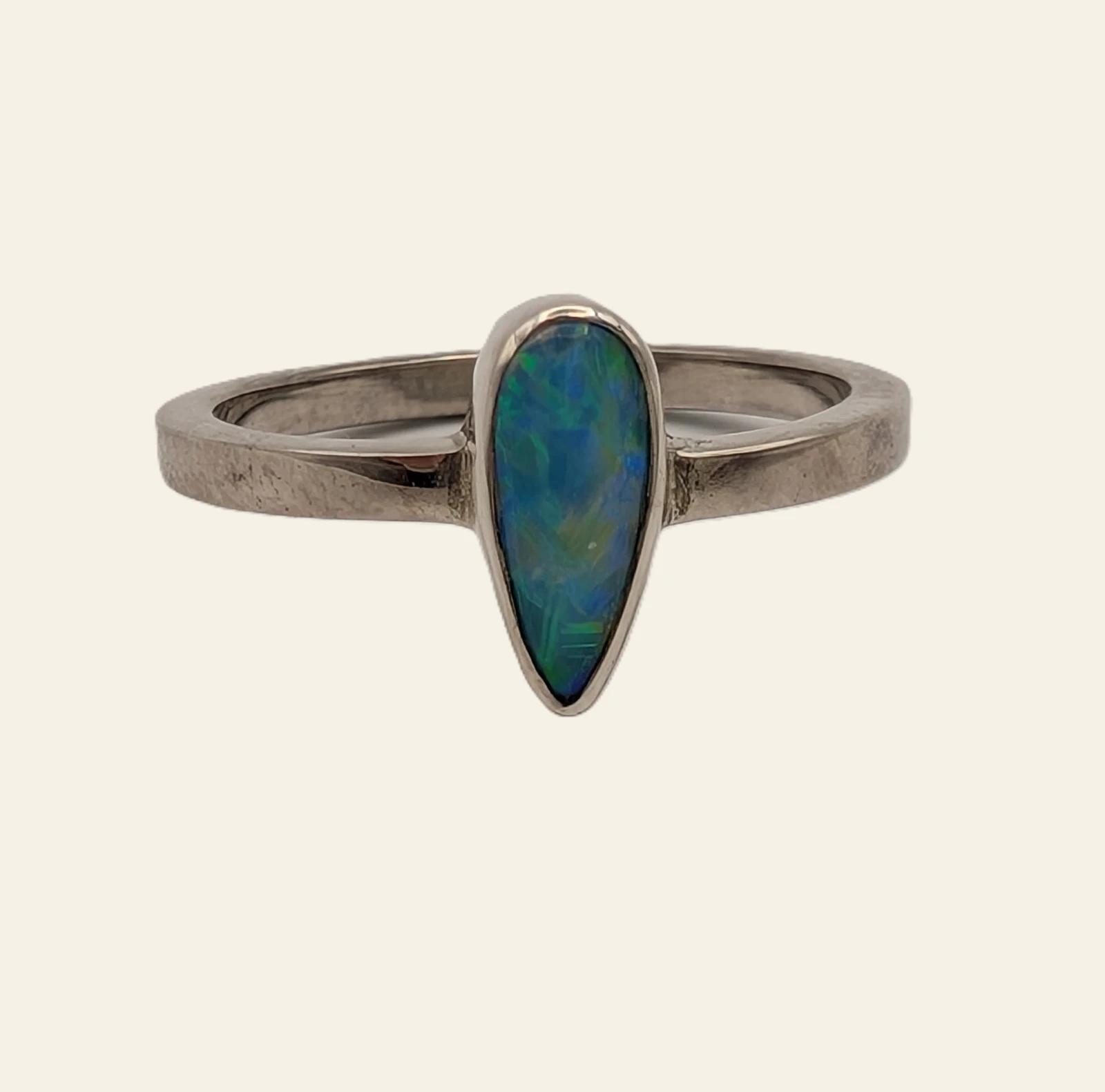
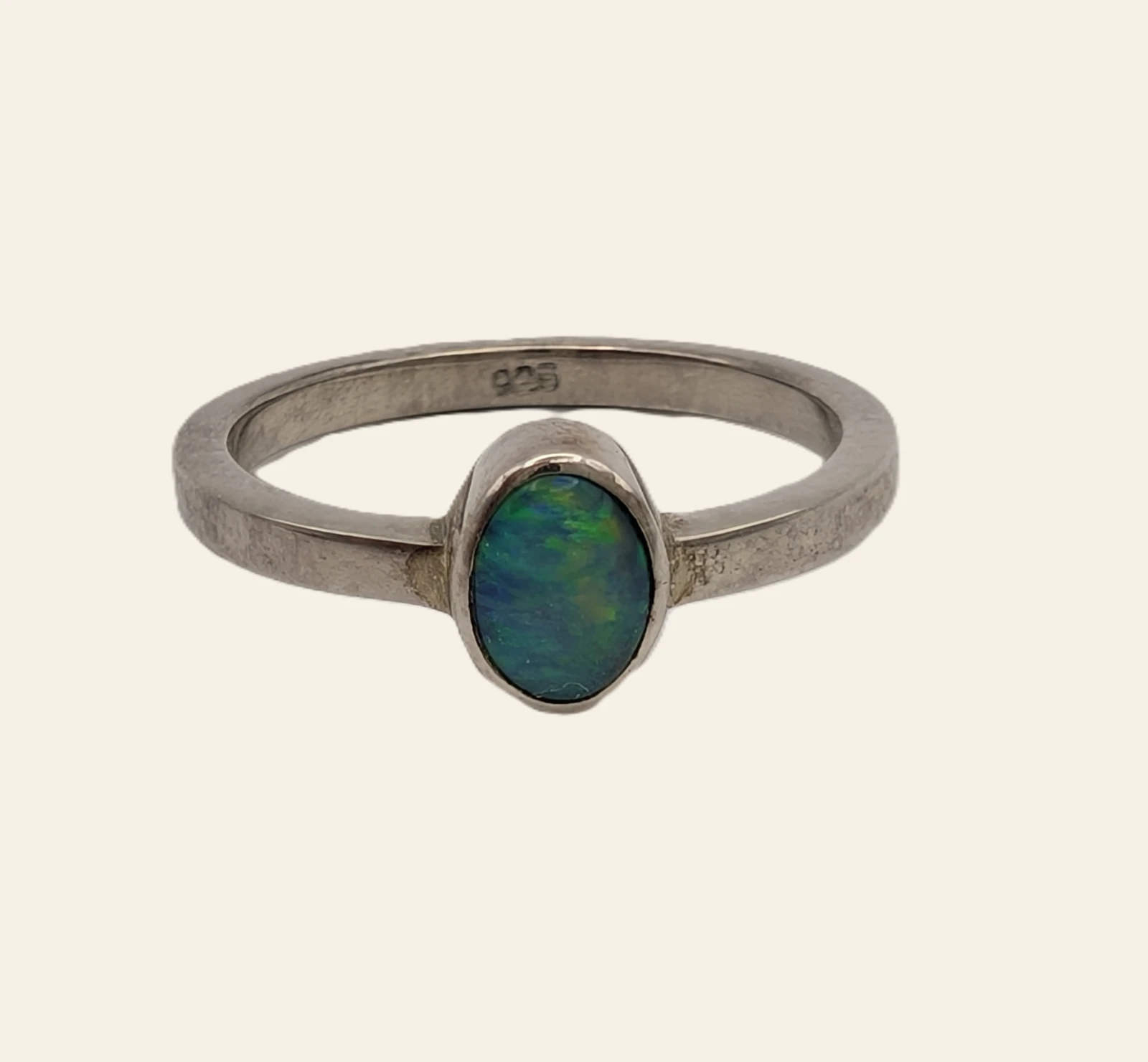
Confetti Light
$400
ring
Qld Boulder Opal
Black, boulder and crystal opal, cut by hand. Honest about durability, certified for origin, and no two alike.
Opal is 5.5 to 6.5 on the Mohs scale. That is softer than sapphire and, in practice, tougher to live with than an emerald and easier than a pearl. It means an opal is fine against fabric, skin and most of a day, and poor against a granite worktop, a car door and a gym bar.
Set properly and worn like jewelry rather than like a tool, a solid opal ring lasts generations — there are Victorian opal rings still in circulation, and they were set by people with worse tools than I have. Set badly, in thin claws, on someone who works with their hands, it will chip, and no certificate fixes that.
I re-polish stones I've cut, for as long as I'm at the bench. Not as a promise in a footer — as the practical answer to "what if it scratches". Surface scratches come off. That is what re-polishing is.
A thin claw-set opal solitaire for someone who works with their hands. I'd rather lose the sale than replace the stone in two years and have the conversation about whose fault it was.
If that's the ring, the honest options are a bezel deep enough to take the hit, a smaller and better-protected stone, or opal in a pendant with something harder on the finger. I'll say so before you spend anything.
Boulder opal is structurally the toughest choice: the natural ironstone back is part of the stone, so there's more material behind the colour and less to chip. It's earthy rather than showy, and it hides a scuff better than anything else here.
Black opal is the showpiece — the drama and the cost. It wants a bezel and an owner who takes rings off for the garden. Crystal opal is the light, subtle end, and it wants the most care because you are looking through a polished window that shows every mark.
The one-of-one argument lands harder here than anywhere else on this site. The ring cannot be duplicated, by me or anyone. For an engagement that is either exactly the point or exactly the wrong idea, and you'll know which within a sentence.
Commissions are not a standing service and I won't pretend they are. What I can do is talk to you about the stones I have, what's coming off the wheel, and whether the ring you have in mind is one I'd be willing to build — and tell you honestly if it isn't.
To have a useful conversation I need four things: which stone type you're drawn to, a budget range, the finger size, and the date you need it by. Rough to finished ring is measured in weeks, not days, and the honest timeline depends entirely on what's in front of me.
Any ring in the collection can also simply be bought as it is. Several of them were cut with a proposal in mind, which is a different thing from being sold as bridal.
An opal engagement ring is not the cheap alternative to a diamond, and anyone selling it that way is selling you something else. A solid Australian stone with a face worth proposing on, set in metal built to protect it, sits in the same range as a modest diamond ring — and buys you a stone nobody else has.
The per-carat picture is in the opal price guide, and the durability question is set out at length in the opal engagement ring guide.
Send the stone type you're drawn to, a budget range, the finger size and the date you need it by. A person answers, and the answer is sometimes no.
Keep reading