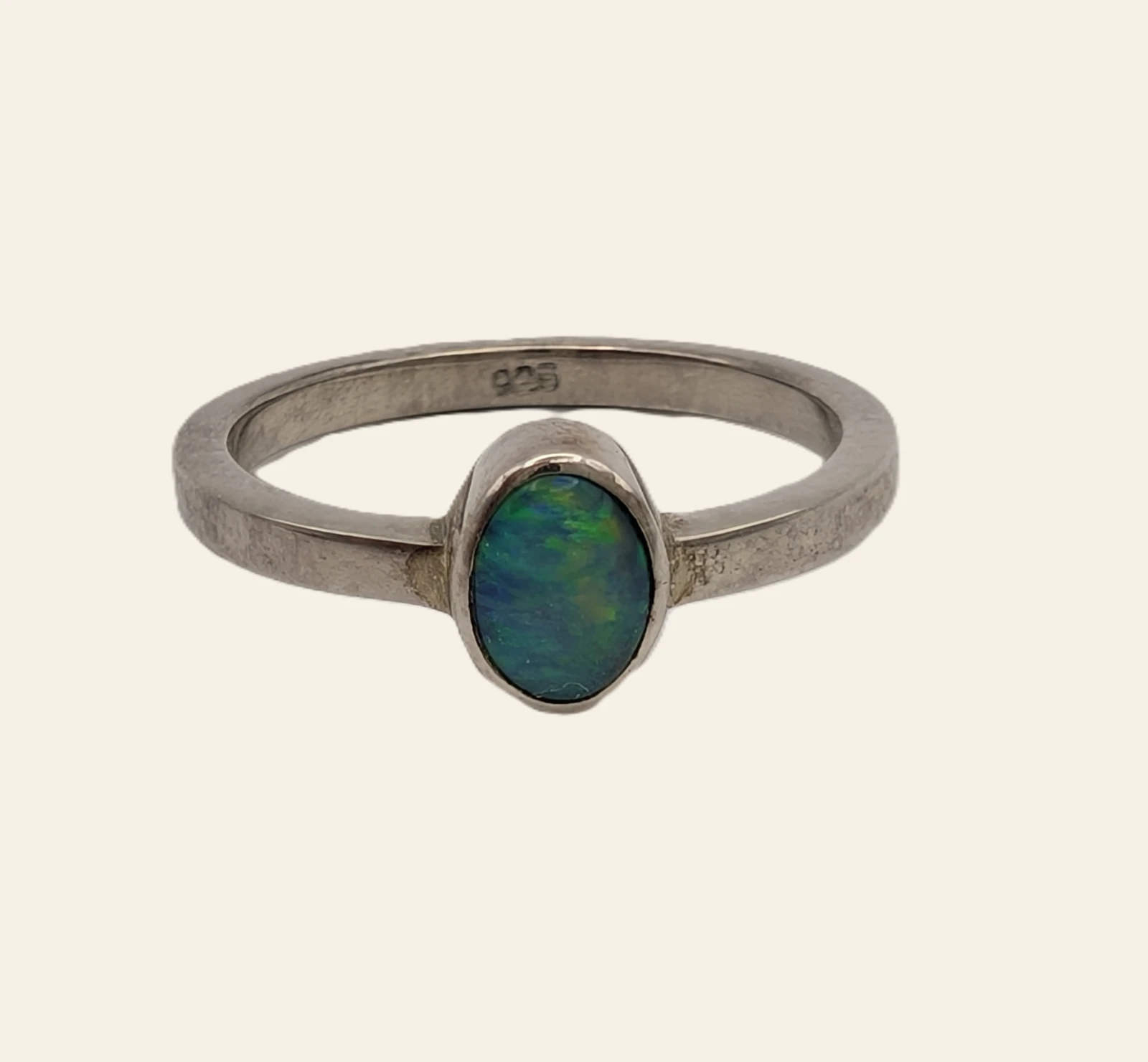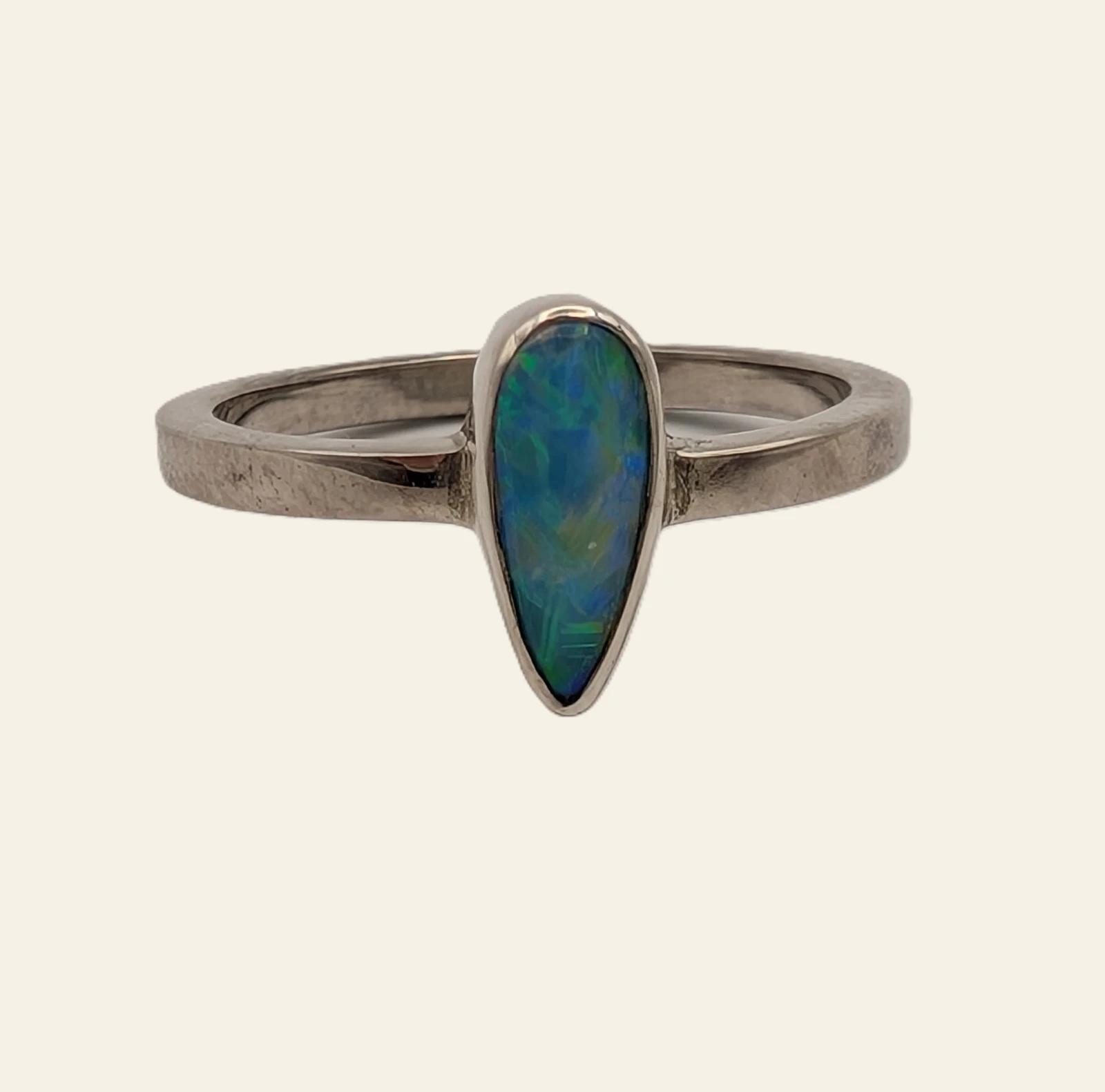
Crystal Teardrop
$400
ring
Black Opal
Solid Australian black and dark opal in sterling and 14k gold. Body tone and mine on every certificate.
A black opal ring under about two hundred dollars is a doublet, a triplet, a treated stone or lab-created. Not sometimes — effectively always. Rough black opal costs more than that before anyone has touched it with a wheel, and then there is cutting, metal and setting on top. Nobody sells a finished solid black opal ring at a loss for the exposure.
That single number does more for a buyer than any amount of gemmology. Cheap plus big plus vivid means composite. Once you know it, most of the internet's black opal falls away and what's left is a much smaller, much more honest market.
Black opal is not black like onyx. The name describes the body tone — the darkness of the potch behind the colour — graded N1 (blackest) to N9 (white). N1 to N4 is black opal. N5 and N6 are dark opal, and honest sellers say so. The darker the body, the harder the play-of-colour sits up against it, the rarer the stone.
After body tone comes brightness, then pattern, then size. Most sellers list size first because it is the only one of the four they can measure with a tool. Every ring below carries its tone and its carat weight, and I'll tell you which end of the scale it sits at without being asked. The full price breakdown is in what black opal costs per carat.
Available today
Every price is for one stone, cut once. Free insured shipping inside the US.
Sterling silver suits the cooler faces — blue-green, sea-glass, anything where a warm metal would fight the stone. 14k yellow gold belongs under red, orange and gold flash, where it finishes what the opal started. That is the whole rule. Everything else is taste.
I set opal deeper than a diamond house would, and I favour a bezel over claws. Opal is 5.5 to 6.5 on Mohs — fine against fabric and skin, poor against a granite worktop — so the metal's job is to take the knock before the stone does. A shoulder that stands slightly proud of the cabochon is not a styling choice; it is the reason the ring survives a decade.
I don't resize opal rings. A torch near a solid opal is a risk I won't take with a stone I cut, so I make the ring at the size it should be. A local jeweler can resize one, and if they do it can no longer come back to me for a refund.
Nearly all true black opal on earth comes from one patch of New South Wales. That is not marketing; it is geology, and it is why the phrase gets borrowed by material that has never been near the place. "Lightning Ridge style" and "Ridge-type" mean the stone is not from Lightning Ridge.
Each ring here names its mine because I know it. If you want the ground rather than the jewelry, read the Lightning Ridge guide — nobbies, seam opal, and how to check a claim before you pay for it.
Doublets and triplets are fine products when they are sold as doublets and triplets. I have nothing against them and everything against the listing that leaves the word out. If a ring you are looking at elsewhere doesn't state construction, ask, and judge the answer by how long it takes.
Prefer something that takes no knocks and needs no size? Black opal pendants are the same stone with an easier life.
Keep reading